 I want to invest
 I want to invest
After the purchase of power station components is valid for 24 hours, the corresponding electricity fee income can be obtained (for example, if the purchase is successful at 15:00, the electricity fee will be received at 15:00 on the next natural day). The system will combine the electricity fee of the day with the principal of the purchased power station components. returned to your member account;
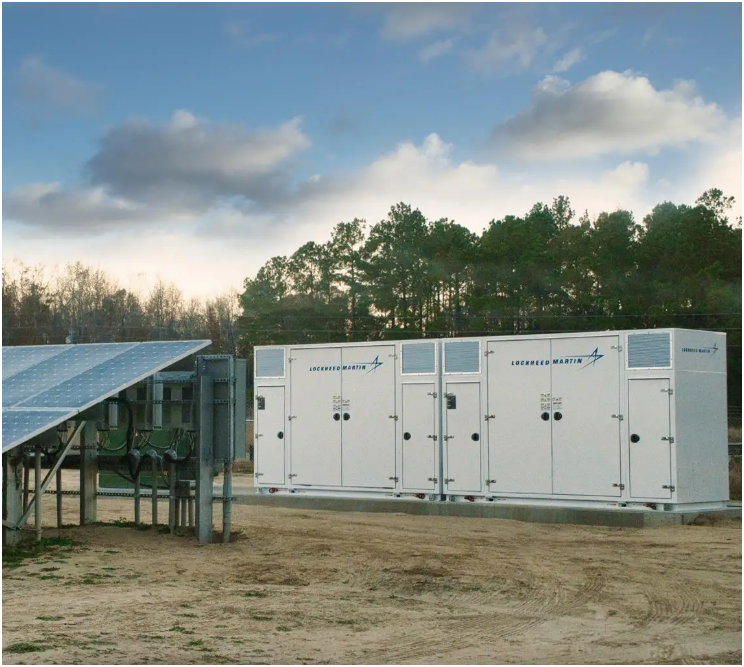
According to foreign media reports, Singapore-based renewable energy developer Gurin Energy has proposed to deploy a 500MW/2000MWh (4-hour duration) battery energy storage system on Honshu, Japan's largest island. Although it is not expected to be deployed until 2026, its scale is equivalent to the total size of battery energy storage systems deployed in Japan to date.
Gurin Energy is so confident about the potential of Japan’s energy storage market that it is planning a utility-scale energy storage project.
Japan’s utility-scale battery energy storage market has shown early signs of an upward trend, with major Japanese players and foreign market entrants developing projects or forming various joint ventures (JVs) to pursue opportunities to develop energy storage projects.
However, details on the size of the battery storage system proposed by Gurin Energy have yet to be released in the Japanese market. For example, the first two battery storage systems to begin trading on the Japan Electric Power Exchange (JEPX) spot market were 2MW/8MWh each, and even among the large-scale projects announced in the months since, projects exceeding 100MWh are rare.
Franck Bernard, managing director of Gurin Energy, said the fundamental drivers for large-scale energy storage projects in Japan are there.
“As the world’s fifth largest energy consumer, Japan has a very strong and mature power sector and ranks second in Asia in terms of solar installed capacity. One of the factors we considered when entering the Japanese energy storage market was how to have a significant positive impact,” he said.
Based on the company’s research and conversations with partners in Japan, Gurin Energy believes battery storage will have the biggest impact. Franck Bernard listed four main macro factors driving the Japanese energy storage market:
• Japan’s national grid is actually a patchwork of regional grids, with the eastern and western regions operating at different frequencies, 50Hz in the east and 60Hz in the west. Since there is little interconnection between these regional grids, flexibility is urgently needed to balance them.
• In Japan, curtailment of renewable energy is rising sharply - when the grid is too congested to accept energy from solar or wind farms, large amounts of power are discarded. In the first half of 2023, Japan's curtailment of electricity was three times that of the same period last year. Battery storage systems can alleviate this problem by feeding electricity from renewable energy into the grid when it is needed.
• Japan has announced ambitious climate and renewable energy targets, with the government aiming for renewable energy to account for 36% to 38% of the total energy mix by 2030 and to achieve net zero emissions by 2050. Integrating a higher share of renewable energy generation will require more energy storage.
• Japan already has what Bernard calls a “vibrant and advanced local energy storage technology ecosystem”, with Toshiba Mitsubishi-Electric Industrial Systems (TMEIC) providing the battery systems for the Gurin Energy project. Another Japanese engineering company, Nippon Koei, is carrying out engineering consultancy services, with experience in operating battery energy storage projects in overseas markets such as the UK and continental Europe.
Build, scale up or scale down
Those drivers are sufficient that Gurin Energy appears confident in the business case for its energy storage projects, even though it has yet to select sites in multiple areas across two northern prefectures in Japan: Fukushima and Tochigi.
Land is scarce in Japan, which limits opportunities for large-scale solar farms, something Bernard acknowledged was a challenge, noting that Gurin Energy needed to select 10-15 hectares of land close to the grid.
Another problem facing solar developers is that their projects face community opposition. In some cases, forests have been cut down or prime agricultural land has been occupied. Bernard said Gurin Energy will choose deployment sites on existing or former industrial land, avoid using agricultural land or land of natural scenic beauty, and also restore industrial land.
“We believe that the Japanese market is ready for a massive expansion of energy storage, as shown by the amount of energy curtailment this year alone,” Bernard said. “We want to see our efforts in this area together with our Japanese partners, which is why we are currently prioritizing energy storage in the Japanese market.”
Many potential business models
As our recent coverage of the Japanese energy storage market noted, the fundamental demand for energy storage has become apparent, but the revenue streams needed to monetize the value provided by storage are still in their early stages.
The JEPX market offers a way to earn revenue through energy arbitrage, but opportunities for ancillary services are limited. This will change in the coming months as new services are introduced. There is also a new capacity market structure coming, which will include auctions for low-carbon capacity, which could play to the strengths of energy storage. Capacity market auctions will begin next year, with delivery of energy storage systems starting in 2027.
“In planning for the battery storage market, we considered a number of potential business models, each with their own associated revenue streams,” Bernard said. “The most common was going to the wholesale market to source energy and flexible off-take. Then there was the capacity market, which made sense for the battery storage we were planning to deploy.”
Japan’s government has said it is promoting energy storage deployment and has introduced a subsidy scheme, while regulators continue to make progress on opening up energy trading for storage systems.
Bernard said that in addition to the 2GWh of battery energy storage projects deployed in Fukushima and Tochigi, Gurin Energy has also identified other opportunities in Japan, which it will continue to explore further in local communities in Tokyo.